Showing posts with label SmartPhones. Show all posts

Monday, January 23

Huawei Ascend P1 S Review

        
     The Consumer Electronics Show 2012 witnessed the launch of the Huawei Ascend P1 and Ascent P1 S smartphones. Both of them offer Super AMOLED screens along with thinnest chassis ever in the market. The Chinese device manufacturer, Huawei, has termed these devices as the world's slimmest smartphones.


    Huawei's Ascend P1 comes in two flavors - the P1 and P1 S. Both offer the same features but where the slimline P1 S gets a 1,670 mAh battery, the P1 is a slightly thicker 7.69 mm (0.3 in) thanks to a 1,800 mAh battery. Aside from the battery, both models have the same specs, which includes a 4.3-inch 960 x 540 pixel Super AMOLED touch display, 1.5 GHz dual core TI OMAP 4460 Cortex A9 processor, 1GB of RAM, 4GB onboard memory, 5.1 surround sound capabilities, Wi-Fi, Bluetooth 3.0, DLNA support, 8-megapixel rear-facing camera with backlight illuminated sensor and 1080p HD video capture capabilities, and a front-facing 1.3-megapixel camera for video calls.

     Both quad-band GSM phones will come running Android 4.0 (Ice Cream Sandwich) and feature a PPVD back cover coating designed to dissipate heat. They will come in metallic black, ceramic white and cherry-blossom pink when released in Europe, the Asia-Pacific, North America, Australia, the Middle East and China from April 2012, with additional colors also on the way. Huawei hasn't yet revealed pricing or potential carriers for the phones.
Share

    Huawei also announced the Ascend P1, an almost similar unit except for its size and battery power. With the launch of these new phones, the image of Huawei with its American consumers is about to take a change from its long standing ‘low cost’ and ‘budget’ notion.
The two phones will start shipping in Europe, North America, Asia-Pacific, China, Australia, and the Middle East in April. Options for colors include metallic black, cherry blossom pink, ceramic white, and more.
             
          Huawei's Ascend P1Keyfeatures

  • Dual-Core Processor TI OMAP 4460 Cortext-A9 1.5 GHz
  • SGX GPU 540
  • QHD AMOLED Display and Super Gorilla Glass 4.3-inch 960 × 540 pixels resolution
  • Android OS 4.0 Ice Cream Sandwich
  • 1 GB of RAM
  • 8 megapixel rear camera with LED flash and video recording Full HD 1080p
  • Front camera 1.3 megapixel camera with 720p HD video recording
  • GSM / GPRS / EDGE, UMTS / HSDPA / HSUPA
  • WiFi b / g / n, Bluetooth 3.0 HS
  • 1,800 mAh battery

               Huawei's Ascend P1 price list
       
               INR:Rs 26000

               USD:$600 approx
             
              For detailed description watch this video 
                            

Sunday, January 22

BlackBerry Torch 9860 Review


What is BlackBerry?

   The most exceedingly common observation about the Torch is that it's very much still a BlackBerry. Despite the gloss-speckled new BlackBerry 6 software, despite the retro-quirky slider anatomy, it's a BlackBerry. Well, what is a BlackBerry?


BlackBerry, in the beginning, was a glorified two-way pager. It's slowly evolved from that decade-old core into what it is today. Like Microsoft Office, a lot of people might use it at home, but it's mostly designed for its corporate base. What BlackBerry tends to be good at, and what BlackBerry users love about them clearly exposes those corporate-tinged roots: well-designed hardware keyboards, push email (routed through RIM's servers), BlackBerry Messenger (a robust, addictive BlackBerry-to-BlackBerry instant messaging service), communications security and encryption (see: Obama, Saudi Arabia, UAE). What it's not been good at: basically everything else. I mean, if you want to highlight the philosophical difference between RIM and say, Apple, consider that RIM CEO Mike Lazaridis brags about how carriers love BlackBerrys because they conserve bandwidth, while Apple told AT&T to screw itself when the carrier suggested making the YouTube app less awesome for users by eating less data.

 Introduction to BlackBerry 9860

   No QWERTY keyboard, no SurePress clickable screen gimmickry, the BlackBerry Torch 9860 is taking the plunge. Not the first time that RIM are venturing into touchscreen but they're past the point of no return with this one. The BlackBerry Torch 9860 will walk among deadly droids and iPhones - probably the most hostile of environments in smartphone land.

No wonder RIM are extra cautious. They had a couple of scouts in touchscreen territory that didn't return. The Storm phones were exposed despite their SurePress disguise. Now, this time RIM are not beating the drum. Their first real touch-only phone doesn't seem to warrant its own name. It's simply a regular team member. A keyboardless model in the Torch lineup.

We bet any of the Storms would kill to be in its place rather than a footnote in BlackBerry history. A history heading towards tablets, history in which the likes of the Torch 9860 will be playing an increasingly greater role.

   The BlackBerry 9860 is a perfectly competent handset with a smart design, easy to use interface, and a healthy selection of features. However, when compared to the competition, it's hard to know exactly who the BlackBerry 9860 is going to appeal to. For your average man on the street, mid-range Android handsets beat it for price and features (if not build), and have a much better stocked app store. And it certainly doesn't have the might to take on the likes of the iPhone 4S or Samsung Galaxy S II. This only leaves the corporate market and BlackBerry fans. With regards the former, the touchscreen form factor may not sit well with the majority of users, particularly when the typing experience isn't quite good enough. Likewise, don't BlackBerry fans buy them primarily for the keyboard anyway? Whatever the case, this certainly isn't a bad phone, just not one we'd outright recommend.

BlackBerry's latest OS 7 and the real-deal touchscreen experience will help the Torch 9860 find a niche of its own. Not that BlackBerry purists will ever get over the lack of a physical keyboard, but the Torch 9860 is not looking at them.


Instead, it has plenty to offer to long-term BlackBerry users with a taste for experiment. The Torch 9860 is part of a new generation of 1.2GHz-powered phones running the latest OS 7. It promises a new touchscreen experience and better specs across the board.

In case you wonder though about QWERTY in the list of cons - it felt right to sound a warning to traditional BlackBerry users. It's too radical a change. So, the Torch 9860 will have a massive point to prove. You can take the QWERTY out of a messenger but never the messenger out of a BlackBerry. Coming up next is our pros and cons list, so let's get down to business


Key features:


  • 3.7" 16M-color TFT touchscreen of WVGA resolution (480 x 800 pixels)
  • Quad-band GSM support and quad-band 3G with HSDPA
  • Single-core 1.2GHz QC8655 processor
  • 768MB RAM
  • BlackBerry OS v7
  • BlackBerry’s proprietary email service and data security
  • Wi-Fi b/g/n connectivity
  • GPS receiver and BlackBerry maps preloaded, digital compass
  • 5 megapixel camera with autofocus and a LED flash
  • HD video recording, 720p@30fps
  • 2.5GB of inbuilt storage
  • 4GB MicroSD card prebundled
  • Optical trackpad
  • Four physical buttons at the bottom
  • Solid build
  • Hot-swappable microSD card slot (up to 16GB)
  • DivX and Xvid video support
  • Office document editor
  • 3.5 mm audio jack
  • Smart dialing
  • Ultra-fast boot times

BlackBerry Torch 9860 Prices

  • Price in India: RS 31400
  • Price in US: $ 595
  • Price in UK: £ 370


 For Detail Description Watch this video

Sony erriscon XPERIA S Review


Sony XPERIA S is now in market…


     The Xperia S builds on Sony’s existing, impressive design standards that were set when it was working with Ericsson. The S feels like a pleasingly solid block in the hand, with a curved back and a distinctive plastic strip separating its buttons from the main screen.That 4.3” screen, indeed, is probably the single best feature of the phone, offering 720p HD resolution and looking as impressive playing movies as any phone elsewhere on the market. A 12MP camera is an excellent complement, and Sony is trumpeting its fast response times. In use, they seemed much better than many rival smartphones, but not class-leading.

    The Xperia S is the first handset to come out of Sony, who bought out the Ericsson part of Sony Ericsson couple of months ago.And as such, the device has been highly anticipated since its announcement at CES 2012. UK users will be glad to find out that the Xperia S is scheduled to be released on January 30. Initially, it was believed that the handset will be ready for customers to buy no earlier than March 9.Currently, the Xperia S can be found on pre-order at Play.com for £450, which also happens to be the cheapest offer around. Clove and Ebuyer also have the device on pre-order.


     The 1.5GHz processor, however, feels particularly fast, and 32GB of storage should be plenty for most users. This is a nicely designed, well specced device.Where the S disappoints, however, is in its operating system – it will launch in March with Android 2.3, Sony says, but an update to 4.0, aka Ice Cream Sandwich, will follow shortly. Until then, Sony’s opinion-polarising proprietary skin will add some modern feel to the device. It’s worth pointing out, to be fair to Sony, that they are not alone in using the older version of Android, and only a few users will actually miss the additional features.
An HDMI-out port and NFC support complete the package – there’s nothing here that’s radical, but the Xperia S is a handset that is premium without being ostentatious, and it marks the beginning of a new era for Sony. With access to the Sony Entertainment Network, it has a focus on music and films that other devices lack – this decent phone bodes well for Sony’s future as a major mobile phone player. Elsewhere you'll get NFC, DLNA, HMDI, and Bravia Sync. The Xperia S is also PlayStation Certified as you might expect.

  The Xperia S scores on 3 counts: Sound, video and display technology. It is built to give competition to phone such as the Samsung Galaxy S2 and the iPhone 4S. While the Xperia S is expected to hit the US markets in mid-2012, we hope that it can make an appearance in India at least by September.


Xperia S features:
  • 4.3 inch Reality Display with Mobile BRAVIA® Engine with HD resolution screen (1280 x 720), as well as front (720p) and back (1080p) cameras for HD recording.
  • 1.5GHz dual-core processor for fast browsing and content download, which can be stored on the internal 32GB flash storage.
  • 12MP back camera with Sony Exmor R™ for mobile along with Fastest Capture to take shots in just 1.5 seconds directly from standby mode. Front-facing camera with 1.3 MP.
  • NFC (Near Field Communications) enabled to access growing range of NFC applications and services as well as Xperia SmartTags.
  • With HD sharing through DLNA, HDMI and using BRAVIA Sync for controlling your Xperia S with your TV remote control when connected to the TV, Xperia™ S delivers a full HD experience on TV.
  • PlayStation™ Certified, that guarantees a high quality smartphone gaming experience and access to the PlayStation® Store.

    Xperia S will be available globally from the first quarter 2012 and will be available in 2 colors; black and white. Android 4.0 is promised and will reach the phones in the second quarter of the year.

Price details comming soon ........

              For detail description watch this videos


Samsung Galaxy S III Review


      Thanks to the phenomenally popular Galaxy range, Samsung is now the biggest smart phone maker on the planet. All eyes will be on whether its flagship S3 handset, which pretty much everyone expects to be unveiled at February's Mobile World Congress in Barcelona, will give Apple something to chew on prior to the launch of the iPhone 5.Will Samsung take this opportunity to break its fixation with black rectangles and deliver something completely different? Or will it be steady-as-she-goes with just power, speed and feature upgrades? Read on for all the latest gossip and speculation 
     
     Thenext-generation Galaxy S handset will also apparently feature an astonishing display resolution of 1280 x 1024, a powerful 2.0GHz quad core processor, with 1.5GB of RAM and 32GB of internal storage. The phone is said to come fitted with a near-field communication (NFC) chip, which will allow tap-and-go payments and remote data transfer.
  
   That the Galaxy S3 will be running the latest Android 4.0 operating system -- Ice Cream Sandwich -- is all but given. The real question is what Samsung is planning for the TouchWiz skin, now that Android 4.0 has stolen the thunder of features like resizeable widgets and easy screen grabs.

      The pop-up mini apps are likely to expand to include more features -- and perhaps a task manager that actually works this time. Another welcome step forward would be taking Samsung's clunky Social Hub off one of the home screens, letting you access basic updates and post anywhere you find yourself. Samsung is rather pleased with its various hubs though, so we're not holding our breath.The guts are rumoured to be Samsung's quad-core ARM A9-based Exynos 4212 chipset, clocked at a ferocious 1.8GHz. That alone would make it one of the fastest phones around (and nearly twice as fast as the iPhone 4S), but Samsung is also claiming hefty speed boosts on graphics and battery-friendly power-saving features.

    The S3 will take a leap in multi-tasking prowess. It's likely to be the first smart phone to boast 2GB of RAM, and will come with a generous 32GB of storage. Those specs will make the phone a total powerhouse capable of performing tasks many laptops would struggle with. We're sincerely hoping it's true -- we're already excited about subjecting it to our benchmark tests.Samsung's vice president of product innovation waxed lyrical on its future phones at CES this year, promising "all-day batteries". A quad-core processor and a massive crystal-clear screen will drain the power faster than we drain a beer glass on Friday afternoon, so we're desperately hoping Samsung addresses the appalling battery life of its phones. Whether we see any new technology implemented on the S3, or on future editions, remains to be seen.


key Features of Samsung Galaxy S3:
  • Android OS Ice Cream Sandwich 4.0
  • 4.5-inches Super AMOLED Plus Touchscreen Display
  • NVidia’s Kal-El 1.8 GHz Dual-core processor
  • 32GB Internal storage memory
  • 1.5GB of RAM
  • Scratch Resistant Surface
  • 12 MP Primary Camera
  • secondary camera available
  • Expandable with
  • 2250 mAh battery
  • 9mm inch thick body


              For detailed description see this video


Motorola Razr Droid Review


    At one point not too long ago, high-end Android powered smartphones were considered to be a rarity in the landscape, but in the last couple of years alone, it seems we've been inundated by them – to the point that the market was over-saturated. In fact, it seemed like every month (even weeks), some kind of high-end device was being announced or launched, which made it very difficult for consumers to separate the great from the greatest. Looking back at it now, there's no arguing that we've been jaded by it all, since our expectations have become rather cutthroat in what is perceived to be a game changing device.
   Combining two of the most memorable brand names in phone history, the Motorola DROID RAZR is bent on establishing itself as the poster child of tomorrow's next-generation Android smartphone selection. On one hand, it follows in the same stylistic manner that made people fall in love with the original Motorola RAZR from back in the day – thanks to its insane razor thin profile construction. Meanwhile, it doesn't skimp out from what we've seen already in the past, considering that it's packed to the brim with some cutting-edge technology to make it one drool-worthy smartphone – like its 4G LTE connectivity, Super AMOLED display, and dual-core processor.
Design:
   Game changing! That perfectly sums up the overall design of the Motorola DROID RAZR seeing that it flaunts one of the most compelling handset designs in recent memory. We're not kidding about that, because going forward, all other smartphones have to live up to its mark.
   Aesthetically, it combines the designs of the Motorola DROID X series and the PHOTON 4G, but it's able to dramatically separate itself from them thanks to its remarkable razor thin construction. Right off the bat, we're mesmerized by its 0.28" (7.1mm) thickness – making it the thinnest smartphone on the market. However, it's not uniform because of the hump towards the top where the camera sensors are placed. Regardless of that, it's an incredible engineering masterpiece to behold considering that it packs 4G LTE connectivity. And to complement its svelte appearance, it's by far one of the lightest smart phones in its size category.
Look & Feel
  
   We have already gotten through the point that the Motorola Razr is a very slim phone, for most purposes. However, while it is slim, there is a problem that we hadn’t envisaged - the phone feels too big! While it is a 4.3-inch display - same as the HTC Sensation XE and the Samsung Galaxy SII, the bezel around the display makes it the thickest among all three. And is the tallest when standing vertically.
    Below the display are four touch sensitive keys - Options, Home, Return and Search. You can hardly see the 1.3MP video chat camera above the display, hidden away nicely in the dark coloured bezel. On the top spine is the 3.5mm headphone jack, the micro USB port and the mini HDMI out. The right spine has the power key (silver in colour) and the volume rocker below it. Since the battery bay isn't accessible, Motorola has allowed access to the SIM card slot and the microSD card slot on the left spine. There are two problems here, though. First, the flap that opens to allow access to these two slots is quite flimsy. It is the only plasticky bit on this phone, and while the rest of the phone is extremely classily built, this just feels very cheap. And it doesn’t stay down while you are inserting the SIM or the memory card - has to be held down with a finger during the entire process. Secondly, the review unit that we received did not indicate how the micro SIM card is supposed to go in - connectors at the bottom or the connectors at the top. We learnt it the hard way when we slid it in with the connectors (golden coloured bit) facing downward, while it was supposed to go in the other way round.
Motorola RAZR Key Features

  • Powered by Android 2.3.6, Gingerbread
  • Dual-core 1.2GHz processor and 1GB RAM for a fast user interface and multi-tasking
  • 8-megapixel rear camera with 1080p HD video capture and image stabilization technology for crisp and clear videos
  • Front-facing HD camera for video chat over 3G or Wi-Fi
  • KEVLAR® fiber for strength and Corning®
  • Gorilla® Glass for scratch resistance
  • Water repellent coating protects the phone, and even the inside components, against everyday spills
  •  Comes in Shadow Black or Glacier white
  •  Preloaded with the Motorola MotoCast app gives you the power to stream or download content from your PC straight toyour device so your personal content is always within reach1
  • Remote wipe, pin lock and government-grade encryption for email, calendar and contacts as well as voice and video chat conferencing
  •  Use Quickoffice® to view, create and edit Microsoft® Word, Excel and PowerPoint documents on your mobile device from anywhere at anytime
  • Bluetooth® 4.0 low energy
  • 32 GB memory: 16 GB on board and 16 GB microSD card pre-installed (actual formatted capacity is less)
  • Powerful 1780 mAh battery

      Without doubt, the new Razr looks absolutely fantastic. Manages to pack in a lot of power in what Motorola calls "the world's slimmest phone". While it isn't bullet proof, you can still boast about the Kevlar layer on the rear panel! The only thing we say going against it is the price, when up against the likes of the Samsung Galaxy SII and the HTC Sensation, all offering similar performance. Maybe it’s the looks!
 For more description see this video

HTC Titan II Review

  
   HTC has announced the massive Titan II Windows Phone at CES. Suffice it to say, Nokia's Lumia 900 is going to have some competition for best Windows Phone when they launch.The big news here is Titan II's 16 megapixel camera, which is easily twice as many as most competing phones, and a 25% more than Sony's recently announced super phone, the Xperia S.
 
   
   In the last year, HTC has stepped up its game in the camera department. First, there was the T-Mobile myTouch 4G Slide, which wowed us with its excellent image quality, intuitive camera interface and wide variety of advanced shooting features. HTC followed up with another camera-centric phone for T-Mobile, the HTC Amaze, which added the BurstShot and a few extra shooting modes. HTC extended this to its Windows Phones, starting with the HTC Titan and following up with the HTC Titan 2.

   According to Jeff Gordon, the online communications manager for HTC, the company wanted to find a way to differentiate itself in the Windows Phone world. Microsoft doesn’t allow overlays (like HTC Sense) and requires certain hardware specs and features. The one area where there is some flexibility, however, is the camera and camera user interface.
  
  The 16-megapixel camera has a F2.6 aperture, which is ideal for shooting in low light environments. It also has a backlit illuminated sensor. The camcorder can shoot up to 720p resolution video. Since the Titan 2 has a single core processor, it can’t support 1080p HD video capture.
   Like the Amaze and Touch 4G Slide, the Titan 2 has a slew of shooting modes and advanced features. You get a couple of hip-looking filters (like a built-in Hipstamatic app), panorama mode, BurstMode (for taking multiple shots in succession), an image stabilizer and flicker adjustment. There are also white balance, saturation, contrast and sharpness controls. HTC has gone above and beyond any camera I’ve seen in terms of shooting modes. Candle Light, Backlight Portrait, Night Portrait, Beach and Text are just a few of the shooting modes. There are also quite a few camcorder modes like Vintage Warm (sepia-toned), Vintage Cold (like an old black and white movie), Overexposed and Blue Tint. The camera interface is also clean and easy to navigate.

KEY FEATURES OF HTC TITAN II

Company : HTC
ModeL : Titan 2
Announced : 2012, January
Status : Coming soon
Display : S-LCD capacitive touchscreen, 16M colors
Size : 480 x 800 pixels, 4.7 inches (~199 ppi pixel density)
Ringtones : Vibration, MP3, WAV ringtones
Memory Slot : No
Internal : 16 GB storage, 512 MB RAM
Data : GPRS, Class 32
EDGE : Class 32
Speed : HSDPA, 14.4 Mbps; HSUPA, 5.76 Mbps
WLAN : Wi-Fi 802.11 b/g/n, DLNA
Bluetooth : Yes, v2.1 with A2DP, EDR
Camera : 16 MP, 4640 x 3480 pixels, autofocus, dual-LED flash
Features : Geo-tagging, BSI sensor, image stabilization, face detection
Video : Yes, 720p
Secondary : Yes, 1.3 MP
OS : Microsoft Windows Phone 7.5 Mango
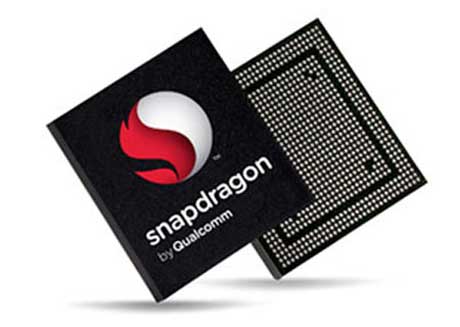
Chipset : Qualcomm S2 Snapdragon
CPU : 1.5 GHz Scorpion
GPU : Adreno 205
Messaging : SMS (threaded view), MMS, Email, Push Email
Browser : WAP 2.0/xHTML, HTML
Radio : Stereo FM radio with RDS
GPS : Yes, with A-GPS support; Bing Maps
Colors : Carbon Gray
Intentainment: – MP3/WAV/WMA/eAAC+ player
MP4/WMV/H.264/H.263 player
– Facebook and Twitter integration
– YouTube client
– Document viewer/editor
– Voice memo
– Predictive text input
Battery : Standard battery, Li-Ion 1,730 mAh

    This has been an exciting show for Microsoft’s mobile operating system with the announcements of both the Titan 2 and the Nokia Lumia 900 on AT&T’s LTE 4G network. Finally, Windows Phone is getting enticing hardware--and its about darn time.
                   For More Description see this video

Wednesday, January 18

Quad-core Smartphones Review

   Get ready for quad-core smartphones, mobile cameras with 8 or more megapixels, a multitude of devices running Android Ice Cream Sandwich, and mainstream adoption of LTE 4G and NFC technology at this year’s edition of the GSMA Mobile World Congress (MWC).


     The International Consumer Electronics Show (CES) has finished for 2012 but mobile device makers are getting ready to showcase their latest achievements at the GSMA Mobile World Congress — a four-day event dedicated to cutting-edge mobile technology.MWC is accompanied by a string of high-profile mobile device announcements and as such is the most closely followed event in the mobile industry.

   Rumours suggest that smartphones including the quad-core HTC Edge, the HTC Ville, the Samsung Galaxy S III, the Asus Padfone, a quad-core Android device from Fujitsu, an improved Lumia 900 with 12MP camera, and new Sony Xperia smartphones will be on the menu along with the first devices running the Linux-based Tizen open source mobile operating system, the launch of BlackBerry 10 OS, and an overload of handsets and tablets running the Ice Cream Sandwich build of Google’s Android mobile operating system.
 
                                              
   A long, hard look at the iOS 5.1 beta 2 shows that Apple is getting ready for quad-core processing in its mobile devices.
The A5 chip in the latest iPhone and iPad models supports dual-core processing only.
Quad-core A6 chips are rumored to be in the works and may land in consumers’ hands as soon as this year.

   By looking at the most recent iOS beta’s code, as 9to5mac already has, we see the operating system supports up to four cores, numbered core.0 to core.3 (developers always start counting with the number 0; don’t ask us why, that’s just how it is).
Quad-core mobile devices aren’t unheard of in these parts. Back in May, Nvidia started singing the praises of its new Tegra 3 quad-core mobile processor. Code-named Project Kal-El (Superboy’s given name, for all you non-nerds), the chip was designed to give mobile phones and tablets performance capabilities on par with those of laptops and other personal computers.

Just last fall, we saw Nvidia demonstrate a quad-core Windows 8 tablet, but the Tegra 3 chip came to market first on Asus’ legally beleaguered Transformer Prime Android tablet, a quad-core beast.
In order to keep the iPad competitive, Apple has to start thinking about quad-core processing power. And quad-core processing would be an awfully nice advantage for gaming and other heavy-duty software.

We’ll see if Apple launches new iPad (and perhaps iPhone) versions featuring quad-core processing in the next few months, but we’d be shocked if the company lets Android manufacturers sneak ahead of it in innovation for very long.

                                                                MWC 2012 Pic


   The rumored HTC Edge will supposedly be the world’s first quad-core smartphone, running the Tegra 3 chip. Mobile news site PocketNow claims to have exclusive images as well as a spec sheet. We take such rumors with a grain of salt, however. The mobile world is prone to shake-ups and surprises, and news of phones from so-called “reliable sources” don’t always come to fruition.


     Nvidia was the first to bring dual-core processing to mobile with the LG Optimus 2X, which debuted at the beginning of this year with the Tegra 2 chip. Nvidia is blazing the multicore trail again with the release of the Asus Eee Pad Transformer Prime TF201 tablet. The Transformer Prime is the first device to ship with Nvidia's 1.3-GHz Tegra 3 quad-core processor. For now, it’s the only quad-core device on the market. The Transformer earned high praise from us for its stunning graphics and zippy performance.


   Qualcomm stated last month that its quad-core Snapdragon chip, the APQ064, will join its S4 line of products. Based on ARM architecture, the S4 chips will run at clock speeds between 1.5GHz and 2.5GHz. Qualcomm’s Vice President of Product Management Raj Talluri, confirmed that the first phones with quad-core Snapdragon chips will ship around the holiday season next year.Unlike Nvidia and Qualcomm, chipset manufacturer TI isn’t putting a number on its OMAP processor. Rather than calling them dual-core or quad-core, TI refers to them as “multicore.” My colleague, Melissa Perenson, visited TI last week at its headquarters in Dallas, Texas, where the company showed off its latest system-on-a-chip, the OMAP 5. The company didn’t give any exact benchmarks, but maintains that the OMAP 5 produces speeds competitive with Nvidia’s quad-core processor.


Samsung Beam Review

   Samsung is one of the leading companies that is continuously bringing very remarkable changes in the forms and facilities of mobile handsets. The Samsung Beam i8520, is the latest model of the company, and it is a real gem that is loaded with fantastic facilities. Altogether, the Beam from Samsung is a remarkable mobile phone.


   Some of its very special and powerful features include outstanding AMOLED display, long-playing battery that can provide backup for more than 30 hours. It is loaded with features like 8.0 Mega-pixel camera that can take quality still and movie pictures. The outstanding finish of the body isextraordinarily attractive, and it can make anybody fall in love with it in the very first sight. This phone has become extremely popular even before its release in the market.


    The Samsung Beam i8520 is highly loaded with network and connectivity capacity. You can use this mobile phone, whether you have 2G or 3G supportive carrier. The handset is supportive of the quad band GSM 850/ 900/ 1800/ 1900 for the 2G and dual band HSDPA 900 and 2100 for 3G. The speed of the browser is good, and it can help you browse at an amazing speed of 32-48 kbps.

    Samsung Beam i8520 is very popular because of its sparkling looks. The big and complete touch screen is very attractive. It is true that the looks of the mobile phone make no sense if it cannot perform well. It displays all the images with resolution of 480x800 pixels with 16 million colours. The TFT touch screen is an added feature to this mobile phone, which makes very special for the customers. This touch screen allows the owners of the mobile phone to customize the icons on the screen. At 3.7 inches, the display screen is huge, and it also brings in other vital features such as multi touch support, scratch resistant surface, Projector UI and accelerometer sensor for auto rotate. 


    The 8-mega pixel camera is a fantastic as well as a powerful feature of Samsung Beam i8520 mobile phone. It can capture wonderful still and video photos. Some vital features of the camera include auto focus, LED flash, face detection, and smile and blink detection. Taking snaps or making recordings is also very simple and anyone can operate it. However, most surprisingly, you can also find a secondary VGA camera in the front.  For Samsung Beam deals visit  

    The Samsung Beam i8520 is provided with music player and video playback features. The handset is a wonderful tool for complete entertainment as it plays MP3, MP4 and also records movies. The stereo FM radio is provided with magnificent sound quality as well.


Tuesday, January 17

Samsung flexible screens mobile phones


     Samsungs  new mobile device lineup will feature flexible screens starting in 2012, the company announced


    The smartphone has become quite an essential part of many people’s lives. Touchscreen has become the new norm in interacting with a device. So, Samsung suggested their newest technology, made for devices Flexible AMOLED Technology which is transparent touch screen technology.The Korean company revealed that it is going to start to ship ‘bendy screened’ gadgets in the first half of 2012 – with the first ‘flexible’ device on the market will be mobile phones. Samsung has also showed flexible screens just 0.3mm thick.


     But its latest video demonstrates brand new technology – a ‘tablet of the future’ that offers instant translation, video, and a level of 3D beyond anything yet available. In the video some amazing advancements can be seen and the demo certainly worth looking forward to.As Samsung revealed, tablet lovers can bend this new unusual screen any which way they please and fold it up too. Moreover, users will be able to see right through it as well. Of course, as with all tablet displays, this one can be also used to watch videos, read books, surf the internet and click pictures. One thing that could be a problem is transparent batteries and other components that make up the phone.


     By the way, factories in the Far East are already working on ‘real’ versions – flexible phones that will enter the market in early 2012. Both Samsung and Nokia are designing the technology.The tech site VentureBeat reports, Vice President of Investor Relations Robert Yi confirmed while having the lat phone talk with investors that Samsung is looking to push out its flexible display devices sooner than later:

   “The flexible display we are looking to introduce sometime in 2012, hopefully the earlier part,” Yi said. “The application probably will start from the handset side.”
As it was mentioned, the first devices providing the technology will be mobile phones the breakthrough can be also installed in some ‘foldable’ iPad-style tablets.


 Earlier Samsung videos have shown off OLED screens which can be folded over. The company demonstrated ‘bendable’ AMOLED screens 4.5 inches across and just 0.3mm thick in January this year.


   Another paper by Samsung scientists showed off an AMOLED screen with a section that could be folded over completely without cracking.

   Earlier this year, some information was leaked saying that Samsung had the capacity to manufacture large amounts of such screens by ‘early 2012′ – but no one could explain what they might be for.There was also leakage of pictures of a concept phone using the technology – the Galaxy Skin. Skin was a designed by students using the Samsung logo and Galaxy trademark.